← Back to timeline · Walls (CSEB / Stone)
Molding CSEB — compressed stabilized earth blocks with lime
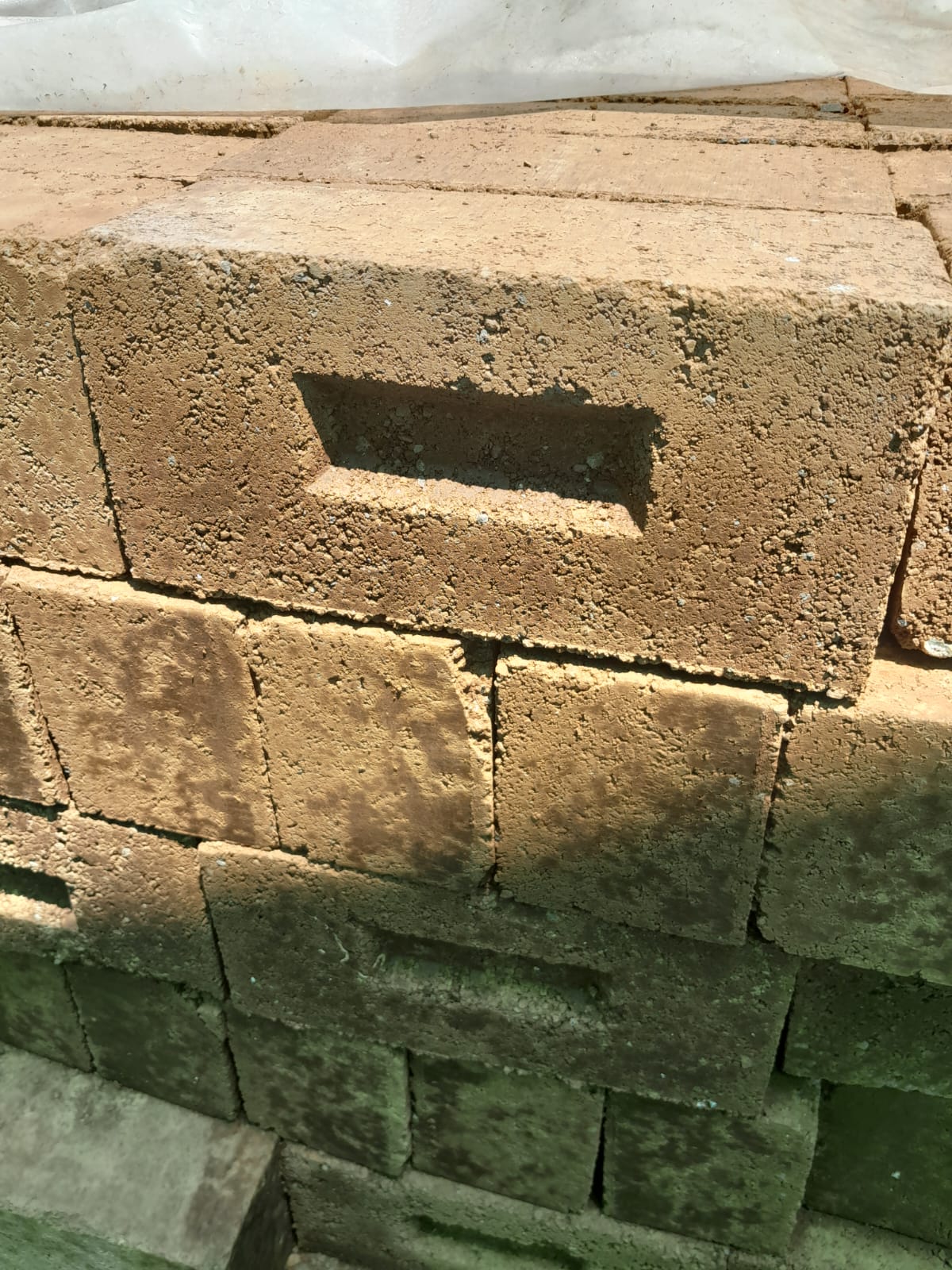
Walls on this build will be made of compressed stabilized earth blocks (CSEB) — soil mixed with a small amount of lime, pressed into shape rather than fired like a conventional brick. It’s a sustainable alternative to burnt brick or cement block: no kiln, no firing emissions, and the earth used is largely the same earth excavated on-site during the foundation stage.
Molding the blocks
Each block is formed by pressing the lime-stabilized soil mix in a manual or mechanical press, compacting it into a dense, uniform unit strong enough to build load-bearing walls.
Protected from rain
Once pressed, the blocks need time to cure — and lime-stabilized earth is vulnerable to being washed out by rain before it’s fully set. The stacked blocks are covered and weighted down under tarp while curing, protected until they’re strong enough to handle.
Storing the blocks
Once cured, the blocks are stacked and stored on site until they’re needed for wall construction.
A technique from Auroville
This method draws on decades of earth-building research from the Auroville Earth Institute in Tamil Nadu, a pioneer in CSEB technology and lime-stabilized construction in India. Both the project’s architect and contractor have their own ties to Auroville — a fitting lineage for the technique to arrive by.
Load testing pending
Load testing for these blocks hasn’t been done yet — it’s pending and will be carried out soon, before they’re relied on structurally in the walls.
Next steps
More CSEB production updates will follow as wall construction ramps up, including load test results once they’re in. See the walls phase for the full picture.