Excavation complete — earth cut to depth
With the footprint marked, excavation began — cutting through the earth at Gorhe Khurd to reach the depth required for the foundation.
When hand digging is not enough
The ground surface was not soft. Digging pits by hand, even with a full team, was simply not feasible in the conditions we found. A JCB was brought onto site to do the work that human labour could not.
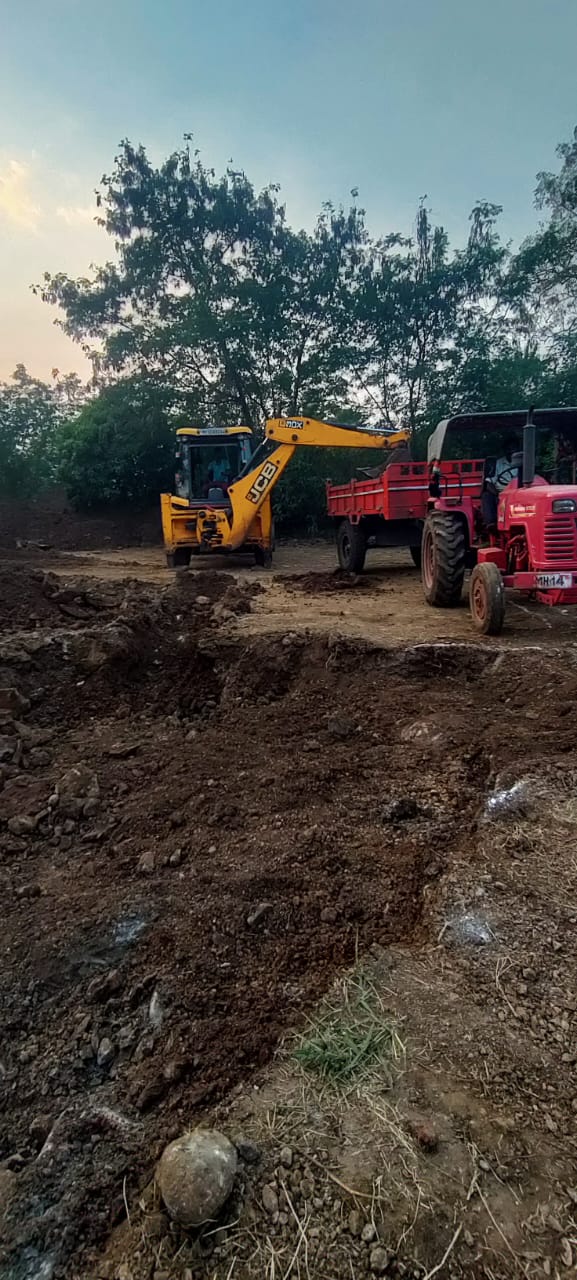
Using a machine was a trade-off: it reached depth quickly and reliably, but the pits came out broader than a careful hand dig would have produced. That extra width was accepted to get the job done on hard strata.
Broader pits on hard ground
Because the surface and subsoil were firm — rocky and dense rather than loose earth — the excavator had to cut wider to work effectively. Small block areas such as bathrooms were opened completely at this stage.
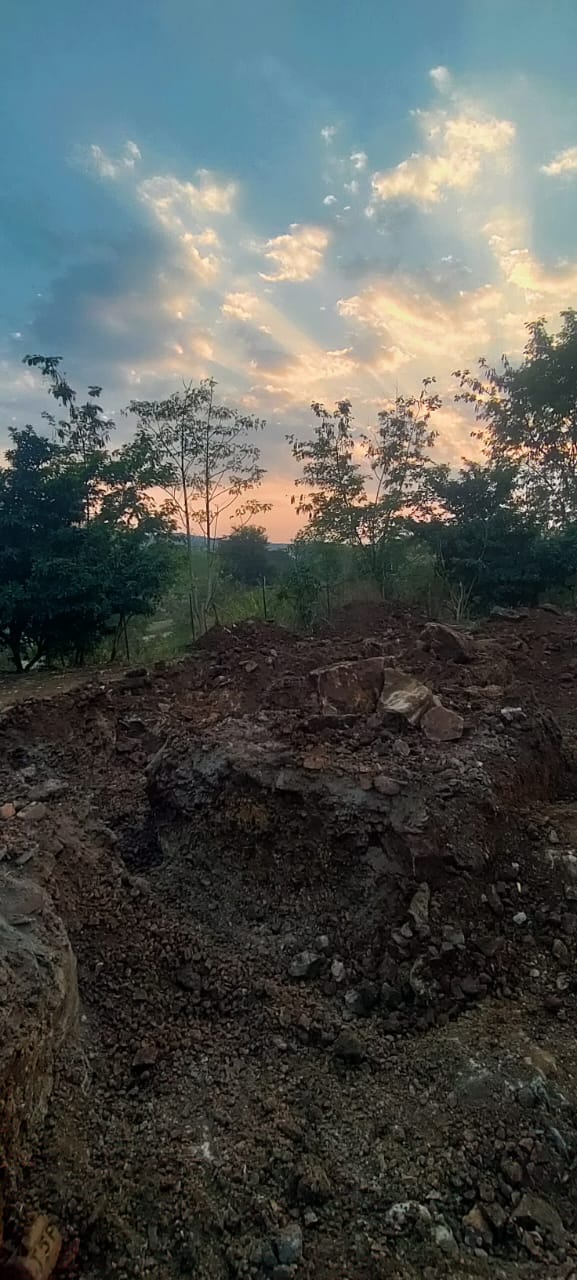
The cut gave us a firsthand look at the soil character beneath the site — information that directly informs our mortar mixes and foundation design.
Hard black basalt
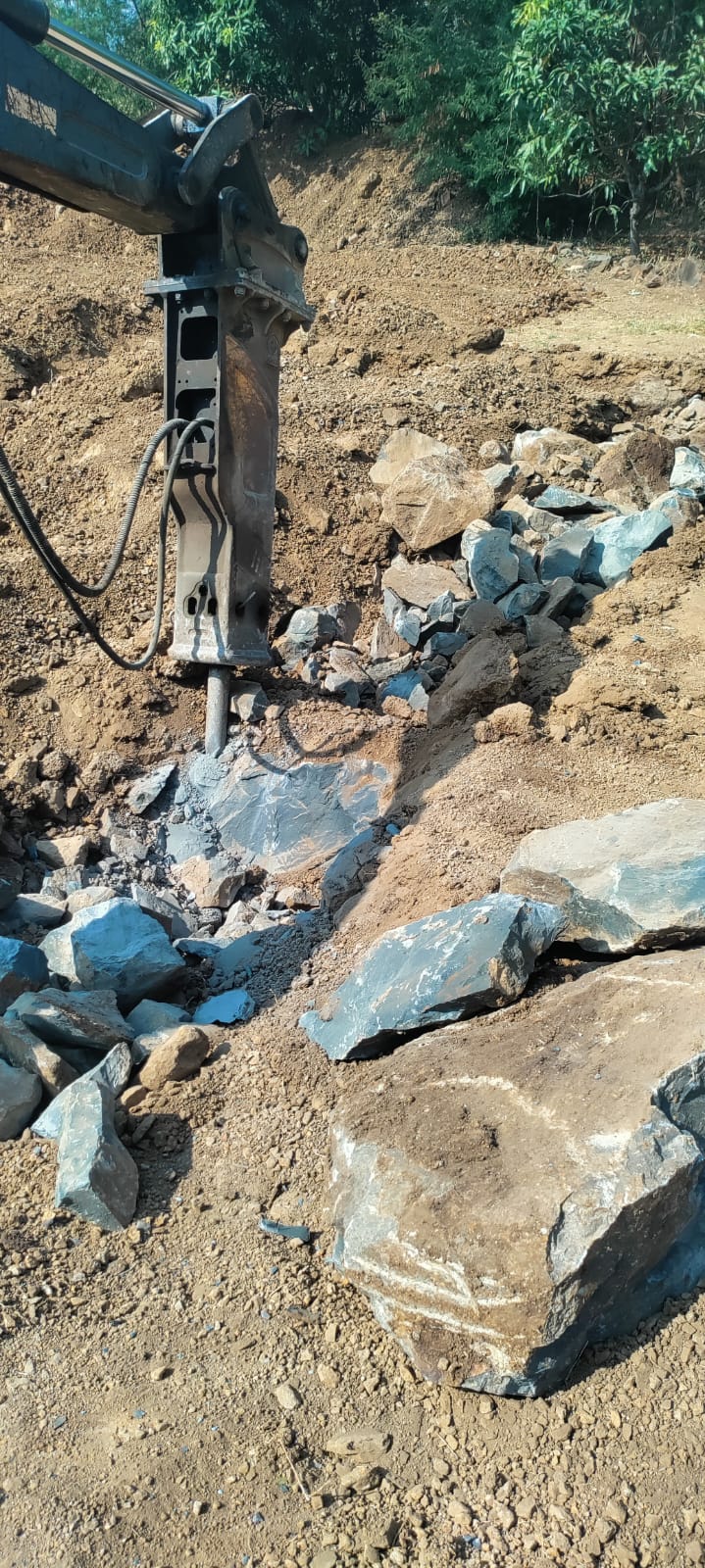
In places the JCB’s bucket alone couldn’t break through — the ground gave way to hard black basalt. A hydraulic breaker attachment was brought in to fracture the rock before it could be dug out.
Observations
- Topsoil was carefully set aside for later landscaping and regeneration
- Subsoil composition is suitable for lime stabilization
- Hard black basalt was hit in places, requiring a hydraulic breaker; depth achieved as per plan
Zero waste approach
Excavated earth is being stockpiled on-site for use in CSEB production and landscaping — nothing leaves the site unnecessarily.
Looking ahead
With excavation done, foundation work began immediately. See the foundation phase for details on what followed.