PCC layer at the foundation — and a lesson in leveling
With excavation behind us, work turned to preparing the trench bottoms for the stone foundation to sit on.
Boulders and murum set aside
Every boulder and murum that came out of the excavation was carefully stored aside on site rather than hauled away — material we’ll reuse later, continuing the zero-waste approach from the excavation stage.
Leveling with stone before concrete
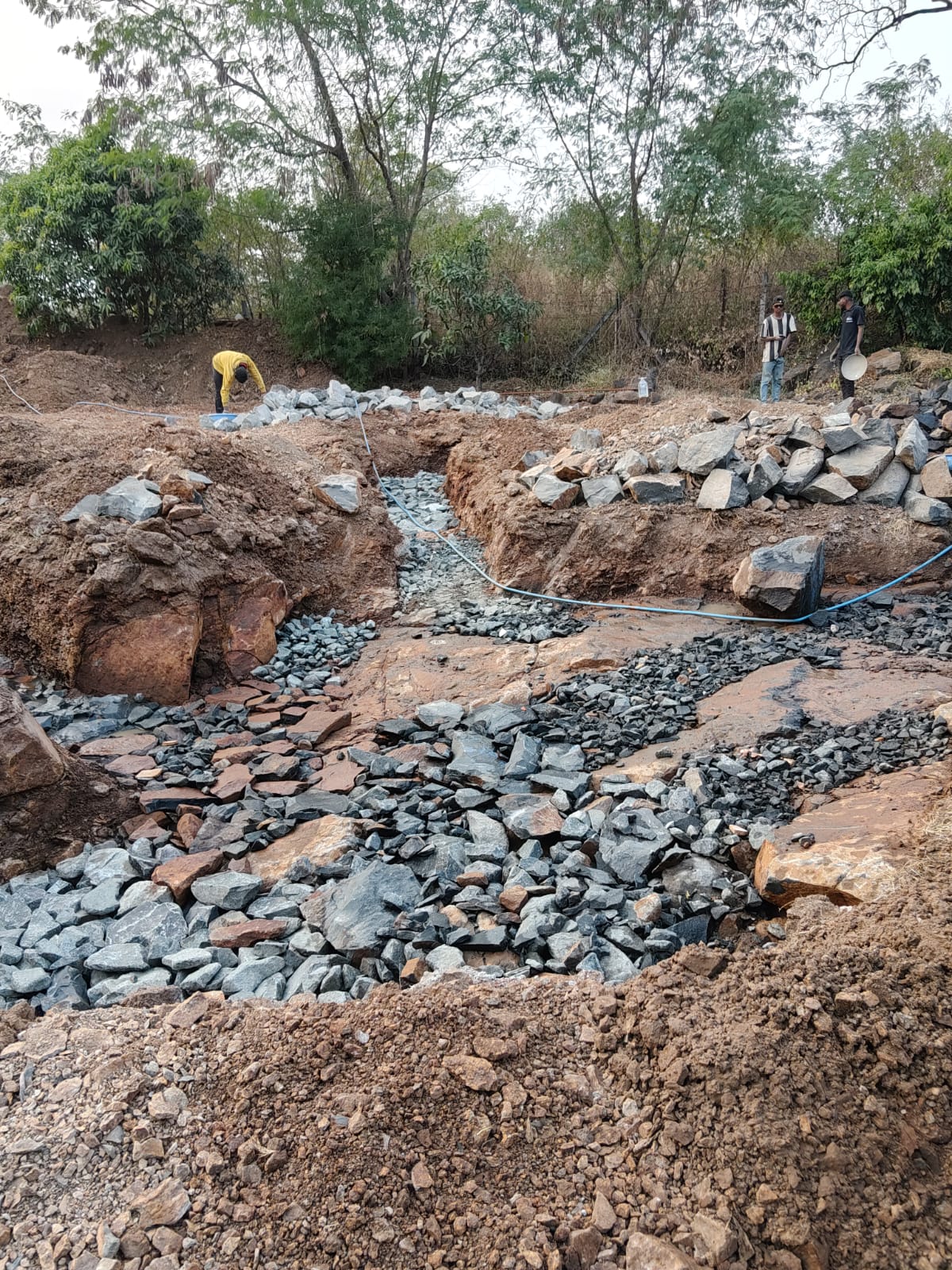
Before any concrete went in, the trench bottoms were built back up to a level surface with small stones — filling the low spots left by the excavation.
Washing and the PCC layer
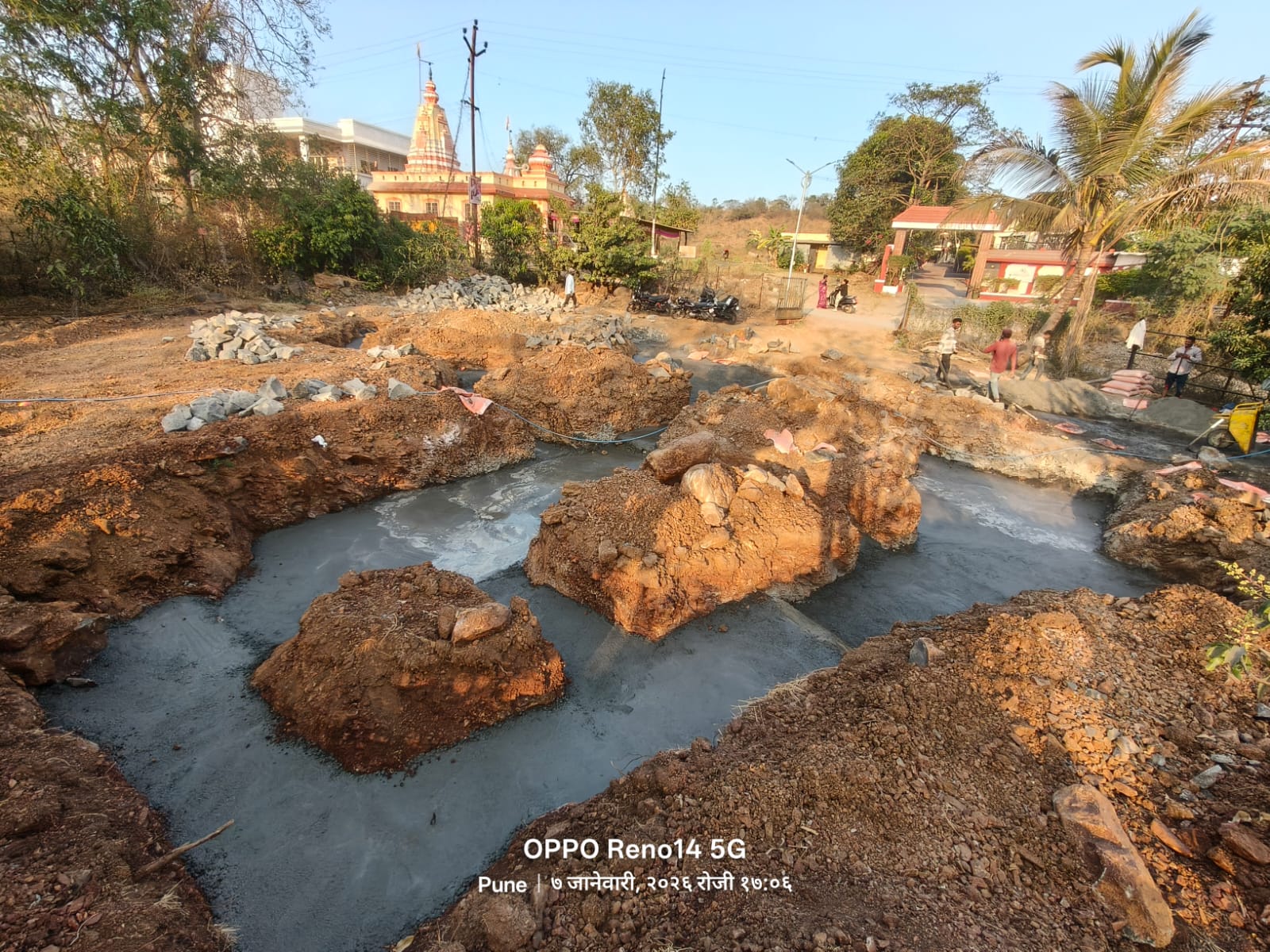
The trench bottoms were washed clean, and a layer of plain cement concrete (PCC) was laid over the leveled stone bed to give the stone masonry a firm, even base.
A lesson in restraint
Ideally, the PCC should have been restricted to the wall lines alone. For the smaller rooms, though, the floor area inside the walls also got covered — wastage that, in hindsight, could have been avoided. Noting it here in the same spirit as our other concrete decisions: documented honestly, wastage included.
Correcting an unlevel pour
Some sections of the PCC came out with a slight slope instead of a level surface. Rather than break and repour, we built masonry steps over the sloped sections to bring them back to level — see the clip below.
The steps carry the load straight down vertically instead of at an angle, which avoids the risk of stones slipping sideways over time.
Lessons learned
- Store excavated boulders and murum on-site — they get reused, not wasted
- Mark wall lines clearly before pouring PCC so it isn’t spread under full room floors unnecessarily
- Check the PCC surface for level before it cures; correcting a slope afterward means building up with masonry steps rather than a clean pour
Next steps
Foundation work continues toward plinth level — see the foundation phase for the full picture.