← Back to timeline · Foundation
Next: Plinth reaches over 4ft — and a water tank tucked under the courtyard →The mortar mix — lime, m-sand, surkhi & soil
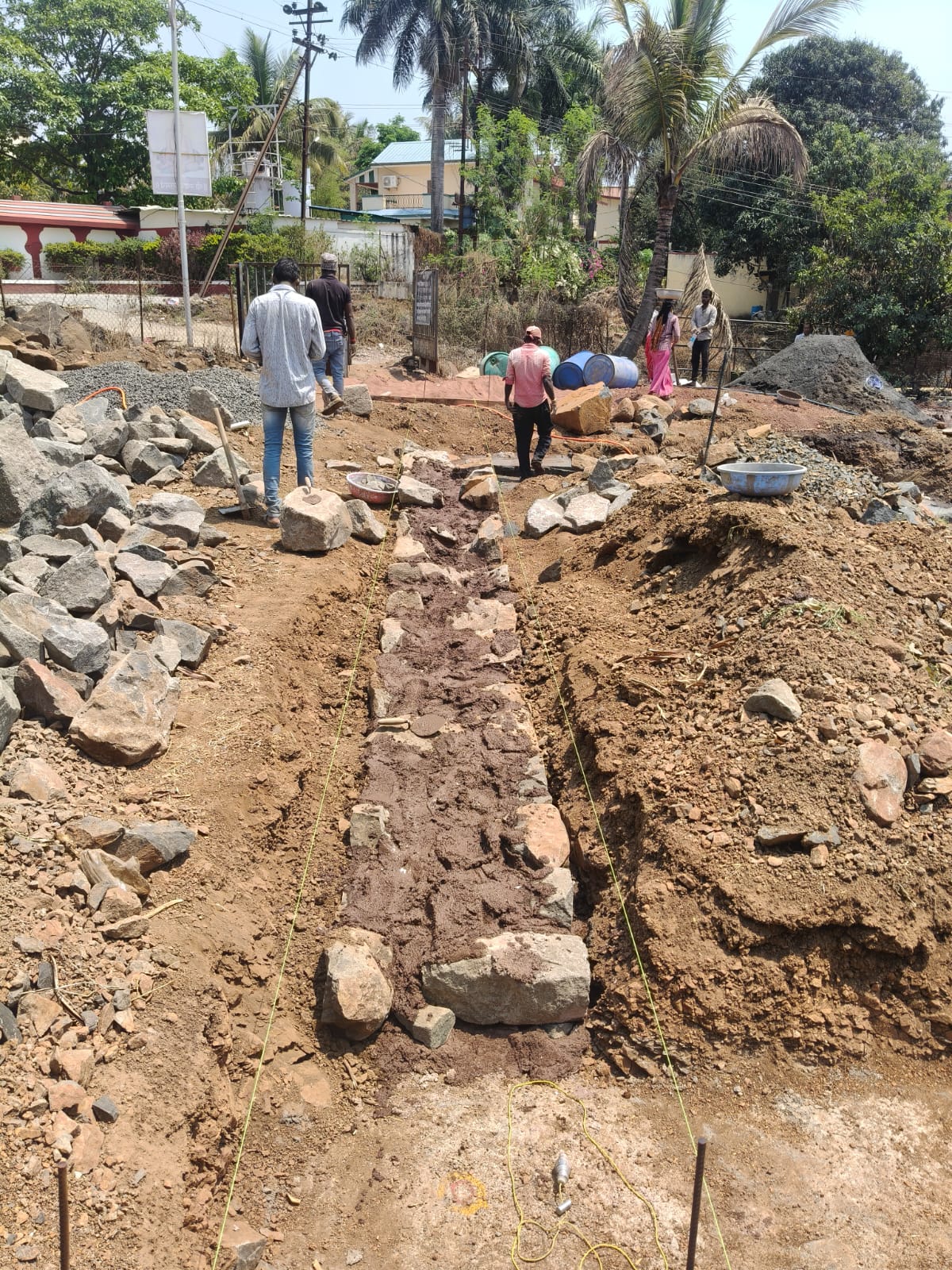
With the PCC base down, the stone masonry above it needed its own binder. In place of cement mortar, it’s bound with a mix of four materials: lime, m-sand (manufactured sand), surkhi (powdered from broken, baked bricks), and soil. Lime is the binding agent; m-sand and surkhi are fillers that add strength and workability; soil keeps the mix in line with the earth-conscious approach behind the whole build.
Sourcing lime and soil
Limestone was not available locally — it had to be brought in from a distance. Soil, on the other hand, turned out to be far more convenient: a soil depot was available literally right next to the plot.
That convenience didn’t mean the first depot was the right one. Multiple soil depots were tested before settling on the soil actually used in the mix.
Soaking the lime
Limestone has to be soaked in water overnight before it can be used — by the next day, it’s ready to work with as the mix’s binding agent. A dedicated tank was built on site just for this soaking.
Using the mix — boulders as they are
Once the lime has soaked, it’s combined with m-sand, surkhi, and soil into the working mortar. In use, big boulders are laid as they are — unshaped — with the mix binding them in place.
A note on surkhi
Not all surkhi goes into the mix. It’s filtered first, and only the fine fraction is used — coarser bits are set aside.
Next steps
This mortar mix carries through the rest of the stone masonry above the foundation. See the foundation phase for how it fits into the wider build.