Doublefree Tags
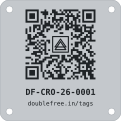
Tag design. The first steel tag is being made; a photo of it sewn onto its piece will replace this drawing.
A Doublefree Tag is a 32 mm square of stainless steel, fixed onto a handmade
piece for life. Its QR code opens the piece’s public passport at
doublefree.in/tags/<ID>, which shows who made it, from what, what the
materials cost, what the maker was paid, and photos from each stage of the
making. No app is needed: scan it, or type its number at
doublefree.in/tags.
- If you buy a piece, you can see where your money goes and who made it.
- If you make pieces, your name (first name and district only) and your work stay with each piece, and you decide what is shown.
- If you sell pieces, you can show customers the record instead of asking them to take your word for it.
Look up a tag Pilot it with us
An example
Here is what a tag opens: the record behind the first tag, for a cardigan crocheted in Pune.
DF-CRO-26-0001 · Striped crochet cardigan
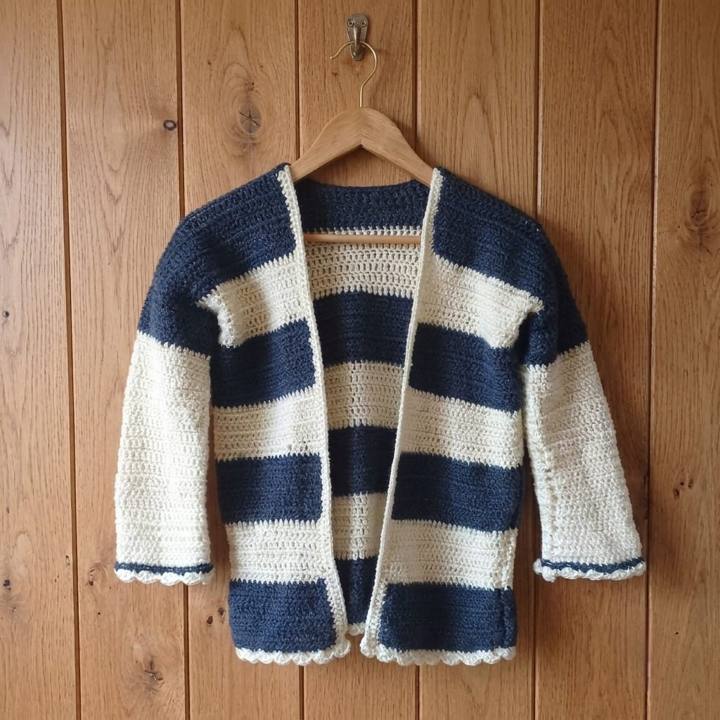
Background edited in a photo app; the cardigan itself was not altered. The passport also shows the unedited photo.
Sample passport: a real piece Rujula made for herself. It is not for sale. Its photos were reviewed by a family member of the maker who was present when they were taken.
- Made by: Rujula, Pune (confirmed in person, 21 Nov 2026)
- Craft: Crochet
- Made: 11 to 20 Nov 2026
- Yarn in the cardigan: about ₹672, for 500 g of acrylic yarn
- Maker’s pay: unpaid, made for herself
- Tag: design ready, being made; not yet sewn on
How it works
- Made. The maker sends photos as the piece takes shape. A steward reviews them and records the materials bought, with what they cost.
- Recorded. Each photo, material and confirmation becomes an entry in the piece’s public log. The maker confirms their role, their pay and what is shown about them.
- Tagged. The piece gets its own tag in SS 316 stainless steel, with the QR code marked into the metal by fibre laser so it survives washing, weather and wear. It is fixed in the way that suits the craft: sewn into a seam on textiles, pinned or screwed onto wood and bamboo, fixed to the back of a painting’s frame, or set into the piece itself. A photo of the tag going on is added to the record, which ties this tag to this piece.
Check a record yourself
Each entry in a passport carries the hash of the entry before it, so changing or removing any entry breaks every hash after it. Corrections never rewrite an entry; they are added as new entries that point to the one they correct. For example, the cardigan’s start date was corrected from 9 to 11 Nov 2026 because the first yarn order is dated 11 Nov.
All passports and photos are public in the doublefreein/tags repository. To check them, download it and run:
python3 verify.py                  # every passport
python3 verify.py DF-CRO-26-0001   # one passport
It needs only Python 3, with no account.
The repository holds no phone numbers, addresses or ages. Makers appear by first name and district only, with their consent.